March 27, 2026
15 Home Staging Tips That Actually Sell Houses
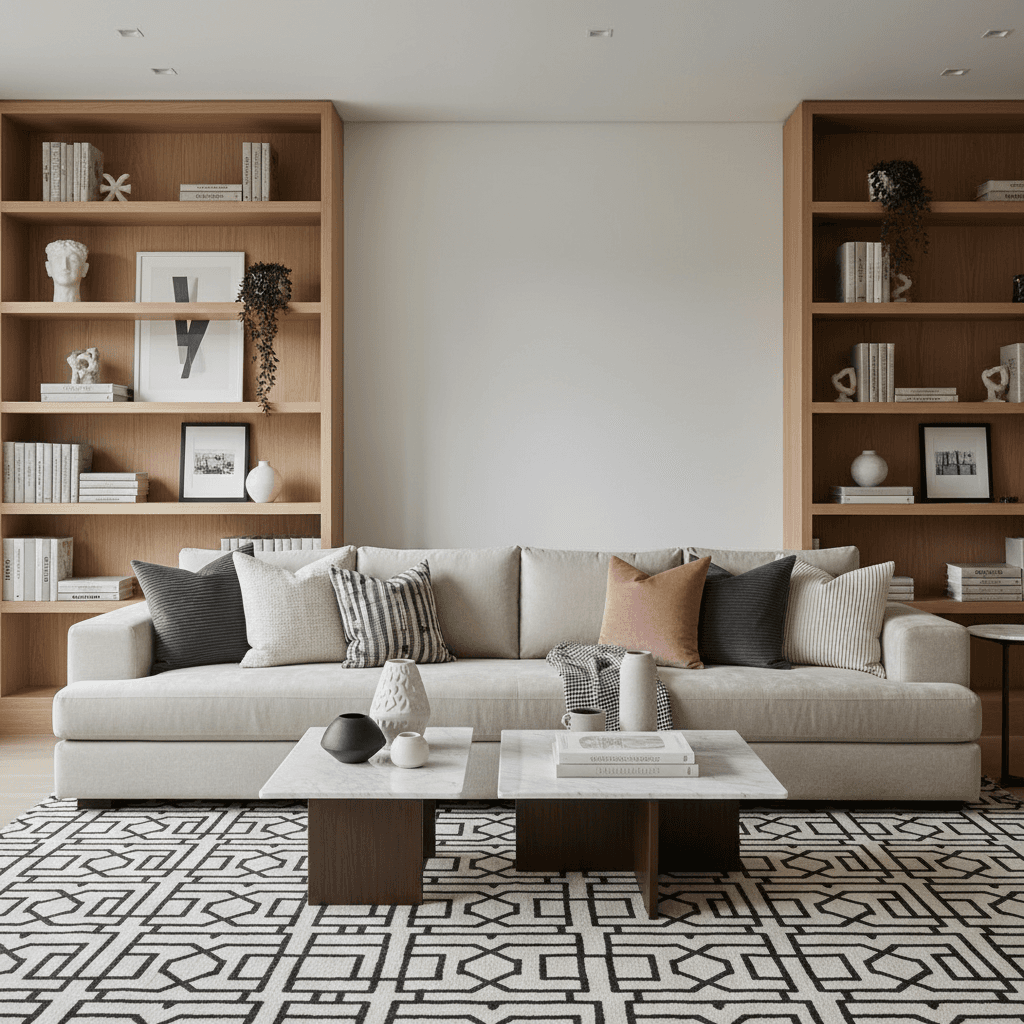
Staging isn't about making a house look like a magazine cover. It's about helping buyers see themselves living there. The best staging combines smart physical preparation with modern tools that enhance how the property looks online — where over 97% of buyers start their search.
Here are 15 tips that actually move the needle, organized from the physical prep work you do before the photoshoot to the digital enhancements that make your listing photos stand out.
Physical Preparation
1. Declutter ruthlessly
Remove everything that doesn't serve the space. Countertops should have one or two items at most. Bookshelves should be half-empty. Closets should look spacious, not stuffed. Buyers aren't looking at your belongings — they're trying to imagine their own.
2. Depersonalize completely
Take down family photos, kids' artwork on the fridge, monogrammed towels, and religious items. The goal is a neutral canvas. Buyers need to project their own life onto the space, and personal items make that harder.
3. Deep clean everything
Clean beyond what you'd consider "clean enough." Grout lines, baseboards, window tracks, light switch plates, vent covers. Buyers notice grime in photos, and in person it's even more obvious. Hire a professional cleaning service — it's one of the highest-ROI staging investments.
4. Fix the small things
A loose doorknob, a dripping faucet, a cracked outlet cover — these tiny issues signal neglect. Buyers start wondering what bigger problems are hiding. Spend a weekend fixing every minor issue. It changes the overall impression dramatically.
5. Paint with neutral colors
If walls are bold or dated colors, repaint with warm neutrals — greige, soft white, or pale linen. Fresh paint is the single highest-ROI improvement you can make. It photographs beautifully and makes rooms feel larger and brighter.
6. Maximize natural light
Open every blind and curtain. Remove heavy drapes and replace with sheer panels if needed. Clean windows inside and out. Light sells — dark rooms feel smaller and less inviting, both in person and in photos.
7. Stage the entry
First impressions happen at the front door. Add a clean doormat, a potted plant, and make sure the door hardware is polished. Inside, the entryway should feel open and welcoming. Remove shoe racks, coat piles, and anything that crowds the space.
8. Define every room's purpose
That room being used as a catch-all storage space? Stage it as an office, guest bedroom, or reading nook. Buyers struggle with undefined spaces. Give every room a clear identity so they understand the home's full potential.
Photography and Digital Enhancement
9. Shoot at the right time of day
Late morning to early afternoon gives you the best natural light for interior shots. For exteriors, the "golden hour" before sunset creates warm, inviting curb appeal shots. Avoid shooting at noon when harsh shadows make interiors look uneven.
10. Use AI virtual staging for empty rooms
Empty rooms photograph poorly — they look cold and make it impossible to judge scale. Instead of spending thousands on traditional staging, use AI virtual staging to digitally furnish them. Modern AI tools produce realistic results in seconds and let you try different furniture styles to match your target buyer demographic.
11. Enhance dark or underexposed photos
Not every photo comes out perfectly exposed, especially in rooms with limited natural light. Rather than reshooting, AI photo enhancement can brighten interiors, balance lighting, and bring out details that were lost in shadows. The difference between a dark photo and a well-lit one can be the difference between a click and a scroll-past.
12. Replace gray skies
You can't control the weather on photo day. Overcast skies make even beautiful properties look dull and uninviting. Sky replacement tools swap gray skies for blue ones with natural-looking clouds. It sounds small, but exterior photos with blue skies consistently get more engagement.
13. Photograph the lifestyle, not just the house
Include shots that show how the space is used — a dining table set for dinner, a reading nook with a book and coffee, a patio with outdoor furniture. These lifestyle shots help buyers emotionally connect with the property. If the home is vacant, virtual staging can create these scenes digitally.
14. Edit consistently across all photos
A listing where some photos are bright and warm while others are dark and blue looks unprofessional. Use batch photo editing to ensure consistent white balance, brightness, and color grading across your entire set. Consistency signals quality.
15. Lead with your best shot
The first photo in your listing is your headline. It determines whether buyers click through or keep scrolling. Choose your most impressive room or the best exterior shot. Make sure it's perfectly lit, well-composed, and shows the property at its absolute best. If necessary, enhance it with AI photo editing to ensure it makes the strongest possible first impression.
Putting It All Together
The most effective staging strategy in 2026 combines physical preparation with digital tools. Declutter and clean the property, then shoot with good light and composition. After the shoot, enhance your photos, virtually stage empty rooms, and replace any gray skies.
Tools like ListingScene make the digital side fast and affordable — virtual staging, photo enhancement, and sky replacement all in one platform, with results in seconds instead of days. Combined with solid physical prep, you'll have listings that stand out in any market.